How to Interpret Scary or Negative Tarot Cards Without Panicking
Veil Soul
Published on · 10 min read
Key Takeaways
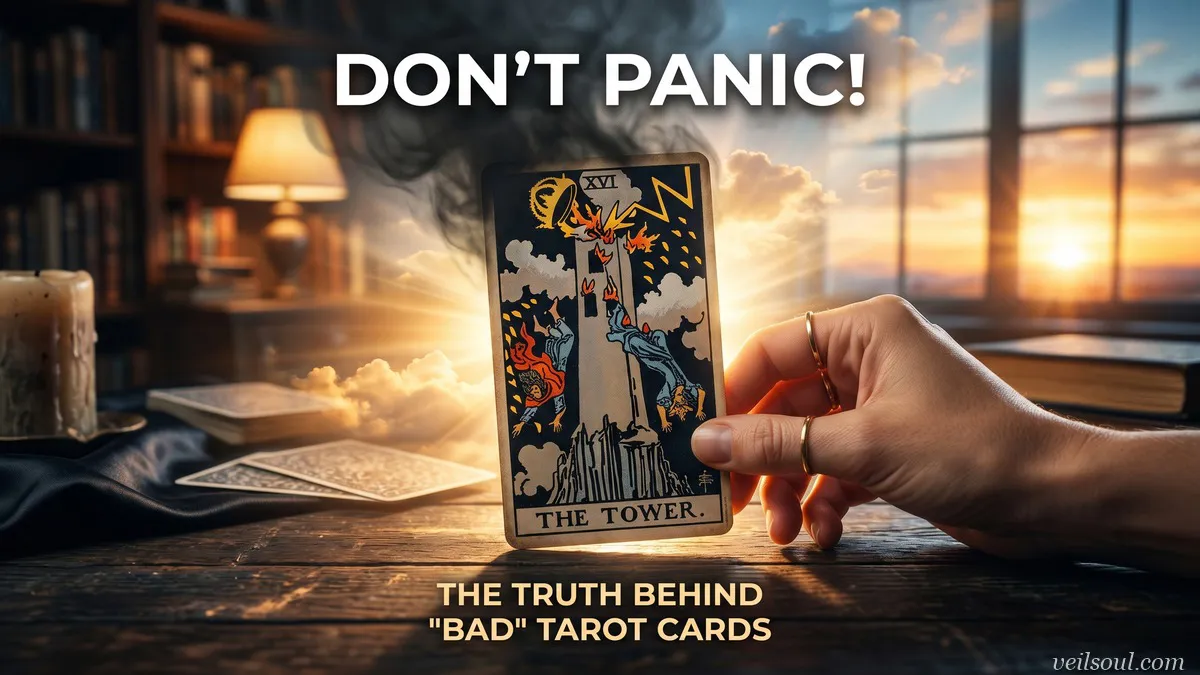
- There are no inherently "bad" tarot cards — only cards that address difficult human experiences like change, loss, conflict, and endings. These experiences are part of life, not punishments
- The cards people fear most — Death, Tower, Devil, Ten of Swords — are often the ones carrying the most liberating messages, because they name the things you've been avoiding
- The fear response to a card is itself information: what you're afraid of seeing is usually what you most need to face
You flipped the card and your stomach dropped. Death. The skeleton on the white horse, trampling a fallen king, a bishop praying, a child offering flowers to the inevitability of transformation. Your first thought: no. Your second: what does this mean? Your third, the one you won't admit: am I going to die?
No. You're not going to die. In modern tarot practice, the Death card has essentially nothing to do with physical death. But your fear response is worth examining — because the way you react to a "scary" card reveals as much about your situation as the card itself. The flinch is data. The dread is information. And the cards you fear most are almost always the ones carrying the truth you most need to hear.
Reframing the "Scary" Cards
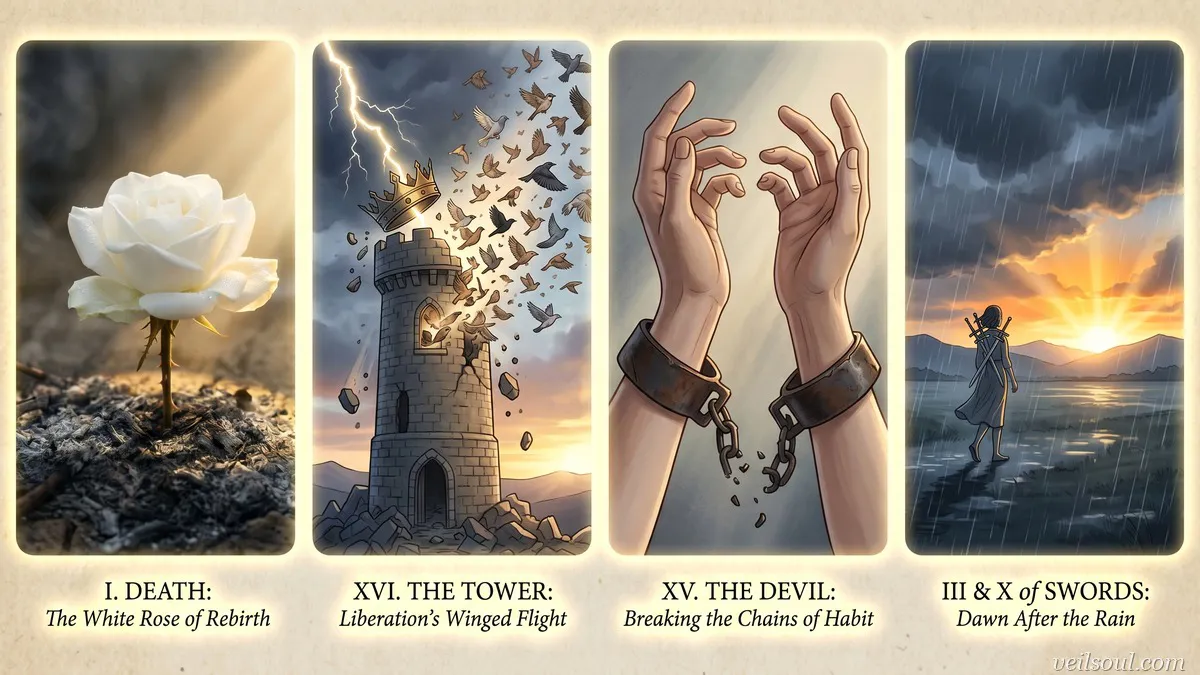
Every feared card has a gift hidden behind its intensity. Here are the ones that terrify people most — and what they're actually offering.
Death (XIII): The most feared card in the deck, and ironically one of the most positive. Death means transformation — something ending so something new can begin. The white horse doesn't tiptoe around the fallen king. It steps over him. Whatever in your life has completed its cycle, Death says: let it be completed. Stop resurrecting things that are done. The white rose banner the skeleton carries represents purity of purpose — this ending isn't random destruction. It's a clearing with intention. Rachel Pollack called Death "the card of ultimate recycling" — nothing is lost, only transformed.
The Tower (XVI): Lightning striking a crown off a tall tower, figures falling, flames erupting. Terrifying imagery — and genuinely intense energy. The Tower represents sudden disruption, the collapse of something you believed was solid. But notice what's being destroyed: the crown. Not the people — the crown. The symbol of false authority, rigid structure, ego-built certainty. The Tower doesn't destroy you. It destroys the prison you didn't know you were living in. The falling figures aren't dying — they're being freed, even though it doesn't feel like freedom yet.
The Devil (XV): That bat-winged figure on a dark pedestal with two humans chained loosely below. The image screams evil to people unfamiliar with tarot. But look closer at the chains — they're loose. The humans could remove them. The Devil isn't about external evil; it's about the attachments, addictions, and patterns you maintain voluntarily because the familiar cage feels safer than unfamiliar freedom. The Devil's gift is awareness: once you see the chains, you can choose to take them off.
Ten of Swords: A figure face-down with ten blades in their back. The most visually brutal card in the deck. And also one of the most hopeful — because ten is the number of completion. This isn't the beginning of suffering. It's the end. There is literally no more room for swords. The worst has happened. And look at the horizon: dawn is breaking. Golden light on the edge of the sky. The card that looks like death is actually the card that says: you survived. It's over. You can get up now.
Three of Swords: A heart pierced by three blades under pouring rain. Pure heartbreak. But heartbreak is also clarity — the moment the comfortable illusion shatters and you see the truth, however painful. The Three of Swords is the card of necessary honesty. The truth hurt because it was true. And truth, once faced, loses its power to terrorize from the shadows.
"A woman pulled The Tower and burst into tears before I could say a word. 'I knew it,' she said. 'Everything's going to fall apart.' I let her cry. Then I said: 'Look at the card again. Not the falling people — the lightning. Where is the lightning hitting?' She looked. 'The crown,' she said. 'Not the people. The crown.' 'The crown is what you built on top of yourself to look a certain way. The marriage that looks perfect on Instagram. The job title that sounds impressive at dinner parties. The lightning isn't destroying you. It's destroying the performance.' She was quiet for a long time. 'I've been performing for ten years,' she said. 'What if I let it fall?' 'Then you get to find out who's underneath,' I said. She filed for divorce three months later. Not because The Tower told her to — but because The Tower showed her that the structure was already falling, and she could either be crushed by it or step out of the way."
Your Fear Response Is Part of the Reading
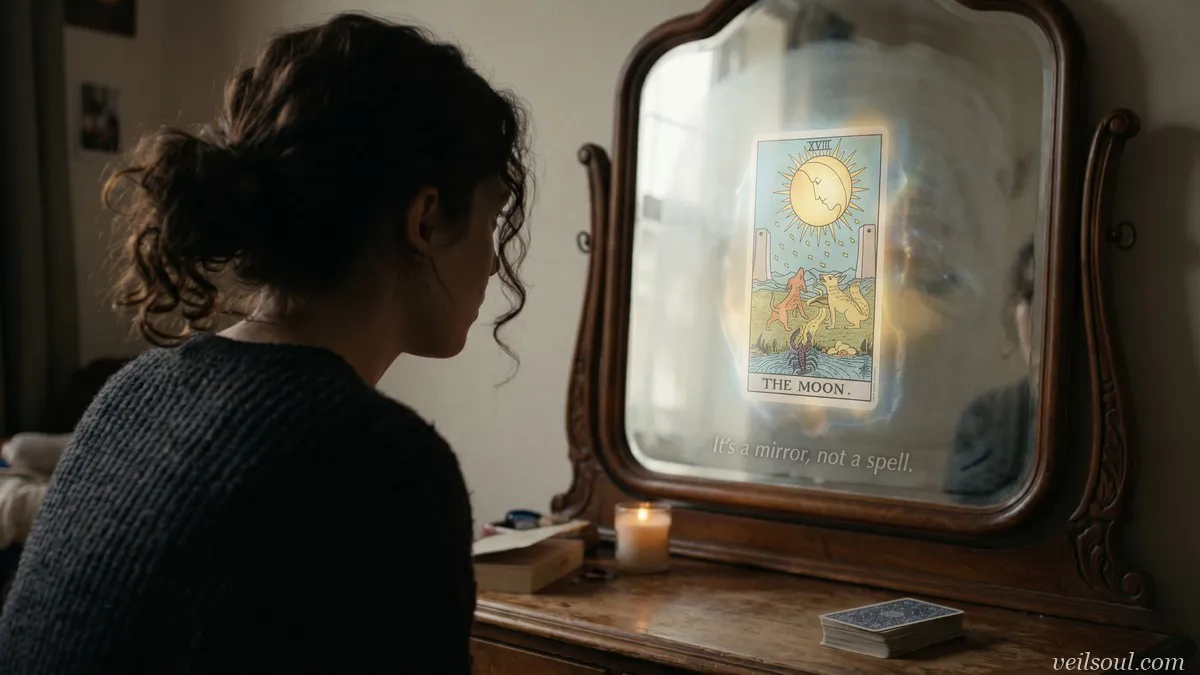
When a card scares you, the fear itself is information. What you're afraid of seeing is almost always what you most need to face.
If Death terrifies you, ask: what in my life am I refusing to let end? If The Tower makes you panic, ask: what structure am I desperately maintaining that might not deserve my effort? If The Devil disturbs you, ask: what am I chained to that I pretend I can't leave?
The card you fear most is the card that has the most to teach you. Mary K. Greer wrote that our "shadow cards" — the ones we instinctively resist — represent the parts of ourselves we've rejected or the truths we've banished from conscious awareness. Meeting them in a reading isn't a threat. It's a reunion with a part of your experience you've been exiling.
Position and Context Change Everything
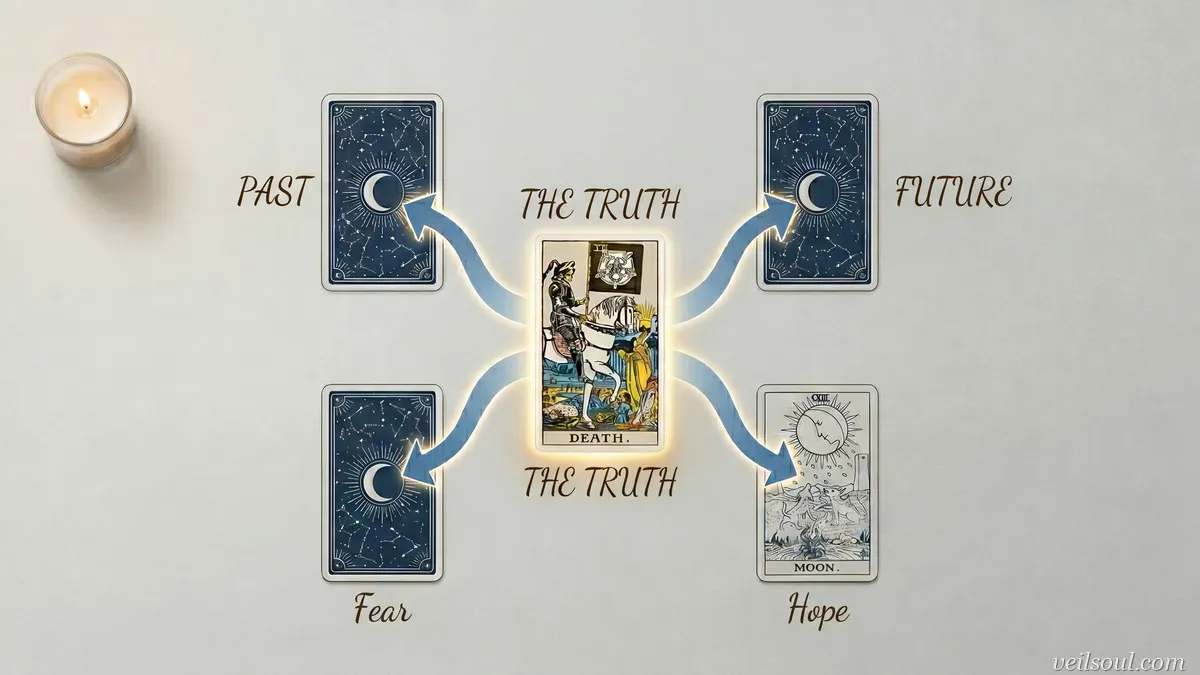
A scary card in one position is a completely different message than the same card in another position. Context is the antidote to panic.
Death in your past position means: a transformation already happened. You survived it. In your present, it means: transformation is actively occurring. In your future, it means: something is ending ahead — and now you have time to prepare. In an advice position, it means: let something go. In each case, the same card carries a different message, and none of them are "you're doomed."
The Tower in a challenge position means disruption is the obstacle you're navigating. In an outcome position, it means a false structure falls. In a "what to release" position, it's the gentlest version of The Tower possible — it's saying you can dismantle the thing voluntarily instead of waiting for lightning. Context transforms scary cards from threats into guidance. Always read the position before reading the panic.
What to Do When You Pull a Scary Card
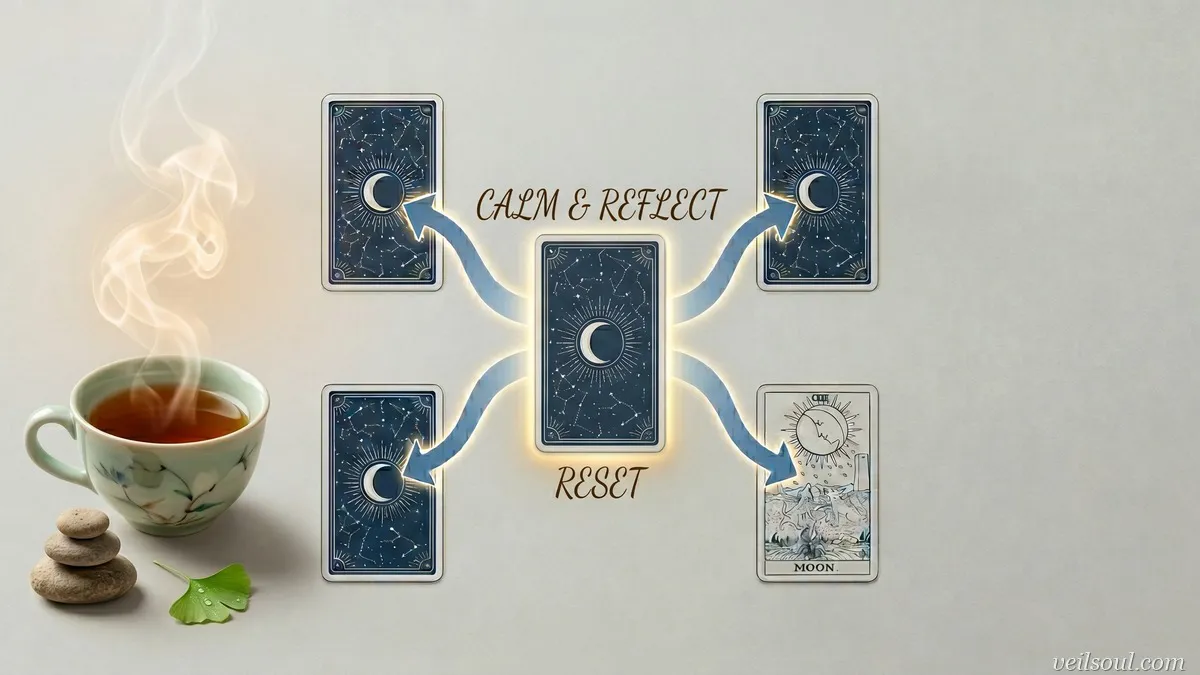
- Breathe. Seriously. Your nervous system just activated. Give it ten seconds to settle before interpreting anything. A reading done from panic is a reading filtered through fear.
- Read the full image. Not just the scary part — the whole card. Ten of Swords has a dawn. The Tower destroys the crown, not the people. Death carries a white rose of purity. Every challenging card contains its own remedy within its imagery.
- Check the position. Where did the card land? Its meaning shifts dramatically based on positional context.
- Ask what it's offering. Not "what is this taking from me?" but "what is this giving me?" Death gives freedom from what's outworn. The Tower gives liberation from false structure. The Devil gives awareness of self-imposed chains. Reframe from loss to gift.
- Remember: the card isn't the event. Pulling The Tower doesn't cause disruption any more than a weather forecast causes rain. The card is reflecting what already exists in your energy field. It's a mirror, not a spell. For deeper understanding of this, see can tarot predict the future.
Frequently Asked Questions
Can a tarot card predict actual death?
In modern tarot practice, no reputable reader interprets the Death card as predicting physical death. Ethical tarot reading never makes medical predictions or claims about mortality. If a reader tells you a card predicts death, injury, or illness, leave immediately. That's not tarot — it's manipulation. See our guide on tarot safety.
What if I keep getting scary cards in every reading?
Recurring challenging cards usually signal a life period of significant transformation — not constant crisis, but ongoing change. It's also possible that anxiety is coloring your readings: you're shuffling from a fear state, and the cards are reflecting that fear rather than external circumstances. Take a break, address the anxiety through non-tarot means, and return when calmer.
Should I remove scary cards from my deck?
No. Removing challenging cards creates an artificially positive deck that can't show you the full picture. A tarot deck without Death, Tower, and Devil is like a medical exam that only tests for good health — it might feel comforting, but it's useless for actual diagnosis. The cards are safe. Your relationship to them is what needs to evolve.
Are reversed scary cards worse than upright?
Often the opposite. The Tower reversed frequently means the disruption is internal rather than external — a revelation rather than a catastrophe. Death reversed often means resisting necessary transformation — which is uncomfortable but not dangerous. Ten of Swords reversed can mean the worst has already passed. For more, see our guide to reversed readings.
The scariest card in the tarot deck isn't Death or The Tower. It's whichever card makes you flinch — because that flinch is your psyche recognizing a truth it's been working very hard not to see. The card didn't create the truth. It just held up a mirror you couldn't look away from. And every truth, once faced, loses the power it held while it was hiding.
The reading I'm most proud of involved a client who pulled three cards she'd been dreading: Death, Tower, Devil. She looked at them and said, very quietly: "I think these are the three most important things that need to happen in my life right now." She was right. And she wasn't afraid anymore — because she'd stopped seeing the cards as threats and started seeing them as allies. The scariest cards aren't trying to hurt you. They're the only ones brave enough to show you what everything else is too polite to say. Every other card in the deck will tiptoe around the difficult truth. Death, Tower, and Devil walk straight up to it and introduce themselves. That's not cruelty. That's respect — the kind of respect that assumes you're strong enough to handle the truth.
Ready to face what the cards show? Try a free reading with Veil Soul, or build your interpretive confidence with our intuition guide.
chat_bubble 0 Comments
Leave a Comment