What Is the Most Powerful Tarot Card? The Answer May Surprise You
Veil Soul
Published on · 12 min read
Key Takeaways
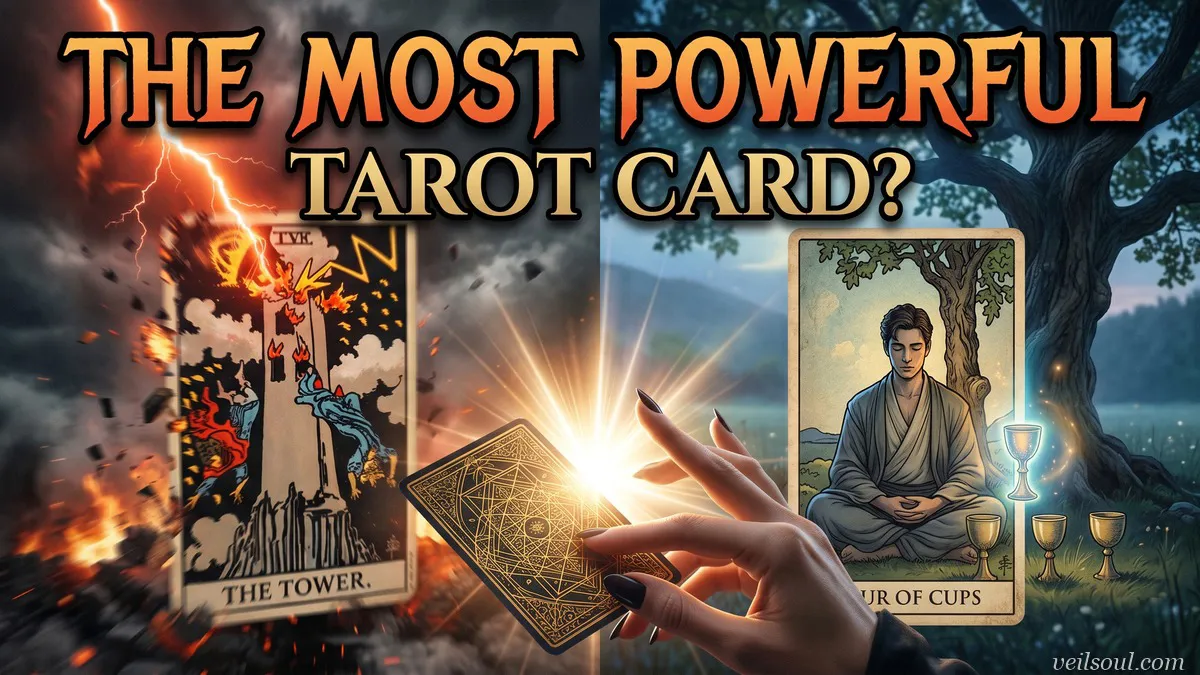
- There is no single "most powerful" tarot card — power in tarot is contextual, personal, and changes depending on where you are in your life. The card that devastates you today might bore you in six months
- Cards commonly cited as "most powerful" — Death, The Tower, The World — earn that reputation through dramatic imagery, but the cards that actually change lives are often quieter: the Two of Swords, the Eight of Cups, the Four of Cups
- The most powerful card in any reading is the one you can't stop thinking about three days later — the one that follows you into the shower and won't let you pretend you didn't understand
You're scrolling through tarot content at midnight, and somewhere between the aesthetic flat-lays and the "pick a pile" videos, you land on the question every beginner asks: which card is the most powerful? You want a definitive answer. A name. A card you can point to and say "that one — that's the big one."
I understand the impulse. When you're learning seventy-eight cards, you want to know which ones matter most. Which cards should make you sit up straighter when they appear. Which ones carry the most weight. But after reading thousands of spreads over fifteen years, I've come to a conclusion that might frustrate you: the question itself is a trap. And the trap reveals something important about how we misunderstand power — in tarot and in life.
The Usual Suspects: Cards Everyone Calls "Powerful"
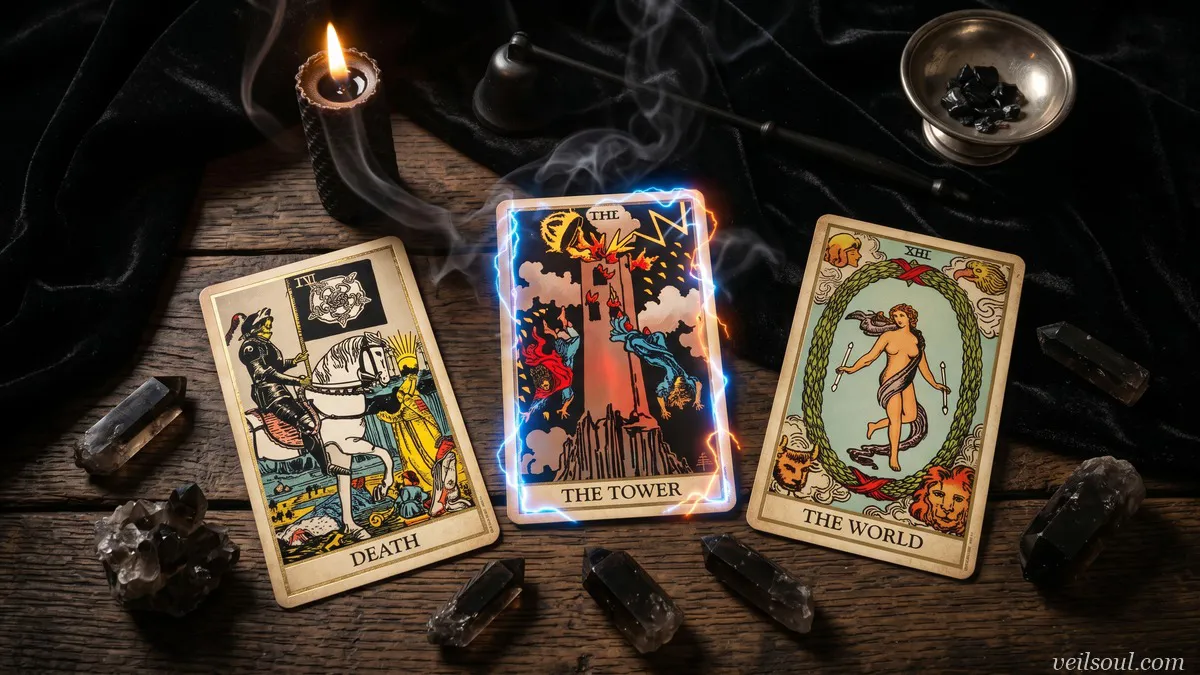
When you search "most powerful tarot card," you'll find the same names repeated: Death, The Tower, The World, The High Priestess, The Magician. These cards earn their reputation through visual impact and cultural mythology — but dramatic doesn't always mean powerful.
Death — the skeleton on the white horse, the fallen king, the bishop praying, the child offering flowers — is the card everyone fears and every tarot article rushes to demystify. "It doesn't mean actual death!" they assure you, before explaining transformation. And they're right. But Death's power isn't in transformation itself — it's in the specificity of what's being transformed. Death doesn't generalize. When it appears, it points a bony finger at one particular thing in your life and says: this. This is what's over.
The Tower — lightning striking the crown, bodies falling, flames from the windows — has the most violent imagery in the deck. It represents sudden, usually unwelcome revelation. But here's what most "powerful card" lists miss: The Tower is over quickly. The lightning strikes. The structure falls. You're left standing in rubble, but you're standing. The Tower's power is acute, not chronic.
The World — the dancing figure inside the laurel wreath, the four fixed signs at each corner — represents completion, wholeness, the end of a major cycle. It's powerful in the way a graduation is powerful: meaningful, earned, and immediately followed by the question "what now?"
The Quietly Devastating Cards Nobody Talks About
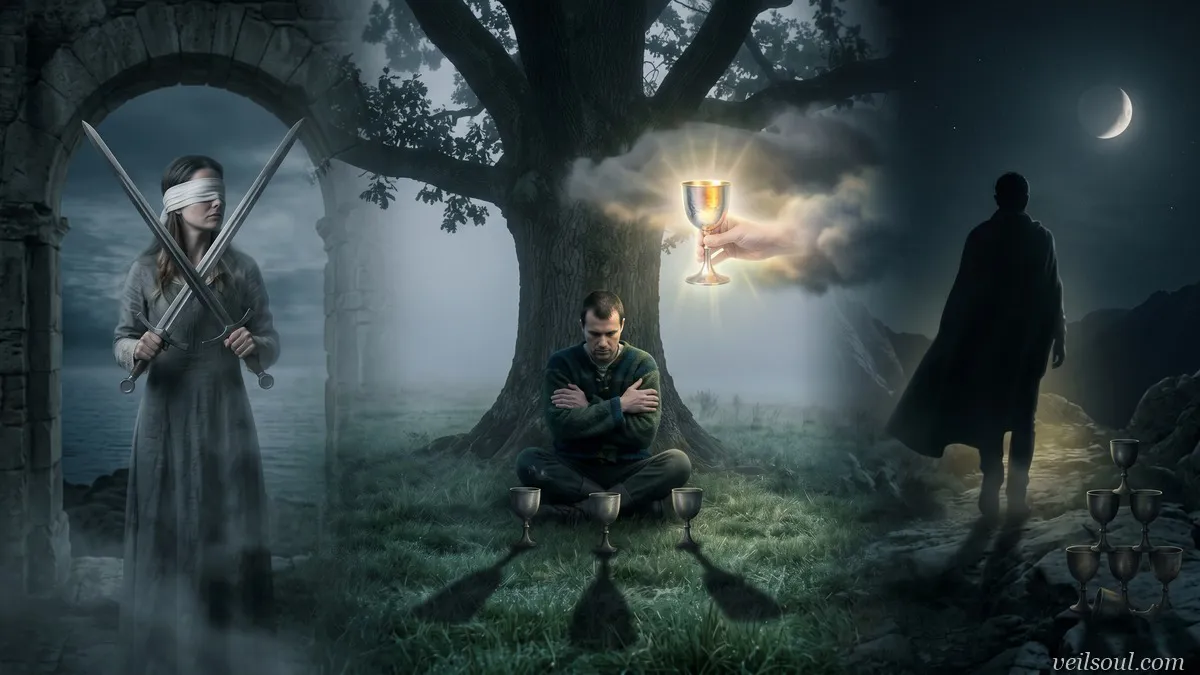
The cards that actually change people's lives rarely make "most powerful" lists. They don't have lightning or skeletons. They have something worse: mirrors.
The Four of Cups — a figure sitting under a tree, arms crossed, three cups before them, ignoring a fourth cup being offered by a mysterious hand from a cloud. This card doesn't shout. It whispers. And what it whispers is: you already have what you need, but you're too busy being disappointed to notice. I've watched this card make grown adults cry. Not because it's dramatic, but because it's accurate in a way that leaves no room to argue.
"A woman came for a general reading — no specific question, just 'whatever the cards want to say.' The Four of Cups appeared in her present position. I described the image: the man under the tree, the offered cup he won't look at. She was quiet for a long time. Then: 'My daughter has been trying to reconnect with me for a year. I keep telling myself I'll call her when I'm ready. But I think I've been sitting under that tree.' She called her daughter from the parking lot. That's power. No lightning required."
The Two of Swords — blindfolded woman, swords crossed over her heart, the sea behind her, a crescent moon above — is the card of chosen ignorance. Not confusion. Not indecision. Deliberate not-knowing. When this card appears, it says: you've made your decision. You made it weeks ago. The blindfold isn't because you can't see — it's because you don't want to see what you've already chosen. In the context of Rachel Pollack's work on the Minor Arcana, the Twos represent choices at their most fundamental — the first division of unity into duality. The Two of Swords is that choice held in suspension, the breath before commitment.
The Eight of Cups — the cloaked figure walking away from eight stacked cups under a partial moon — might be the most underestimated card in the deck. Everyone talks about Death as the card of endings. But Death ends things for you. The Eight of Cups asks you to end things yourself. To look at everything you've built, everything you've invested, and walk away. Not because it's bad. Because it's not enough. That's a harder card than Death will ever be.
Why "Power" in Tarot Is Personal
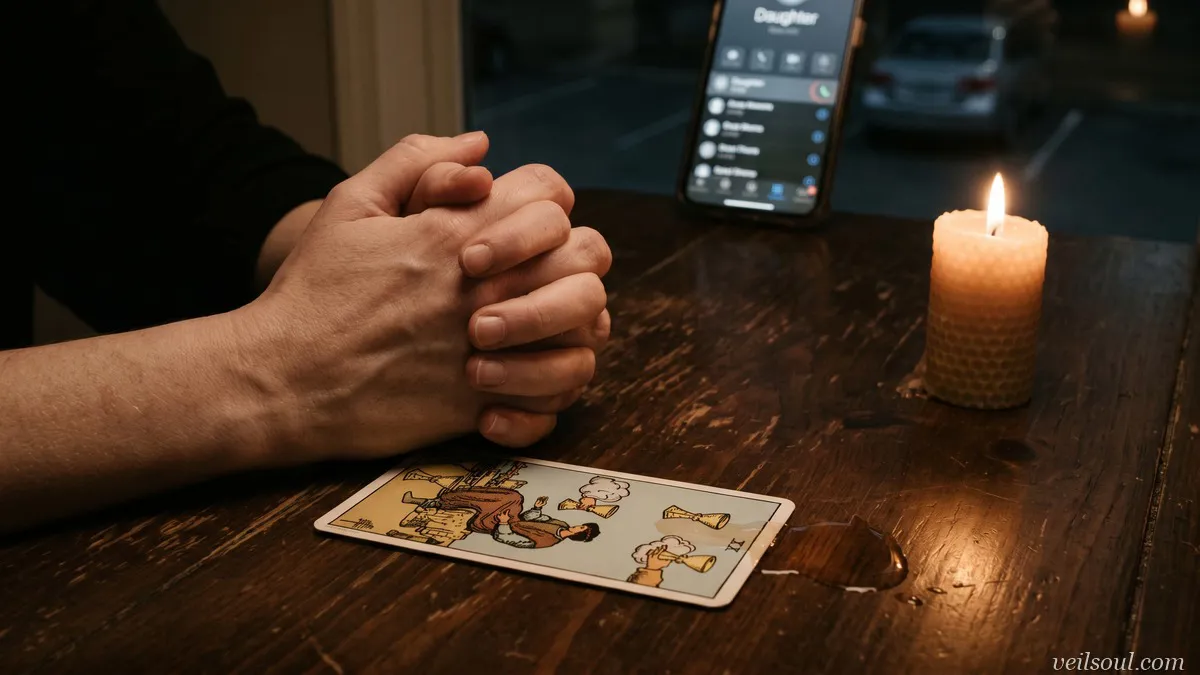
The card that holds the most power for you is the one connected to your deepest unresolved question. It's not universal — it's biographical.
Mary K. Greer introduced the concept of "personal cards" in her work — the idea that each person has cards that resonate more strongly based on their life experiences, numerology, and psychological patterns. Your birth card (calculated from your birthdate) might be The Empress. But the card that actually runs your life might be the Five of Cups — that figure in the black cloak, mourning three spilled cups while two full cups stand behind them, the bridge home visible in the background they refuse to turn toward.
I have a client who pulls the Moon in almost every reading. The Moon — two towers flanking a path, a dog and wolf howling, a crayfish emerging from water, the face in the moon looking down impassively. For her, it's always about the same thing: the fear of trusting her own perception. "Am I seeing things clearly or am I deluding myself?" That question runs beneath everything in her life — career, love, friendships. For her, The Moon is the most powerful card in the deck. For someone else, it might barely register.
This is why lists ranking "the ten most powerful tarot cards" fundamentally misunderstand how tarot works. Tarot is a conversation, not a hierarchy. The Fool — number zero, the beginning before the beginning, standing at the cliff's edge with a white rose and a little dog — is "powerful" if you're at a crossroads. The Ten of Pentacles — the old man, the family, the dogs, the archway carved with symbols — is "powerful" if you're building a legacy. Context creates power. The card doesn't bring it; you do.
The Card That Follows You Home
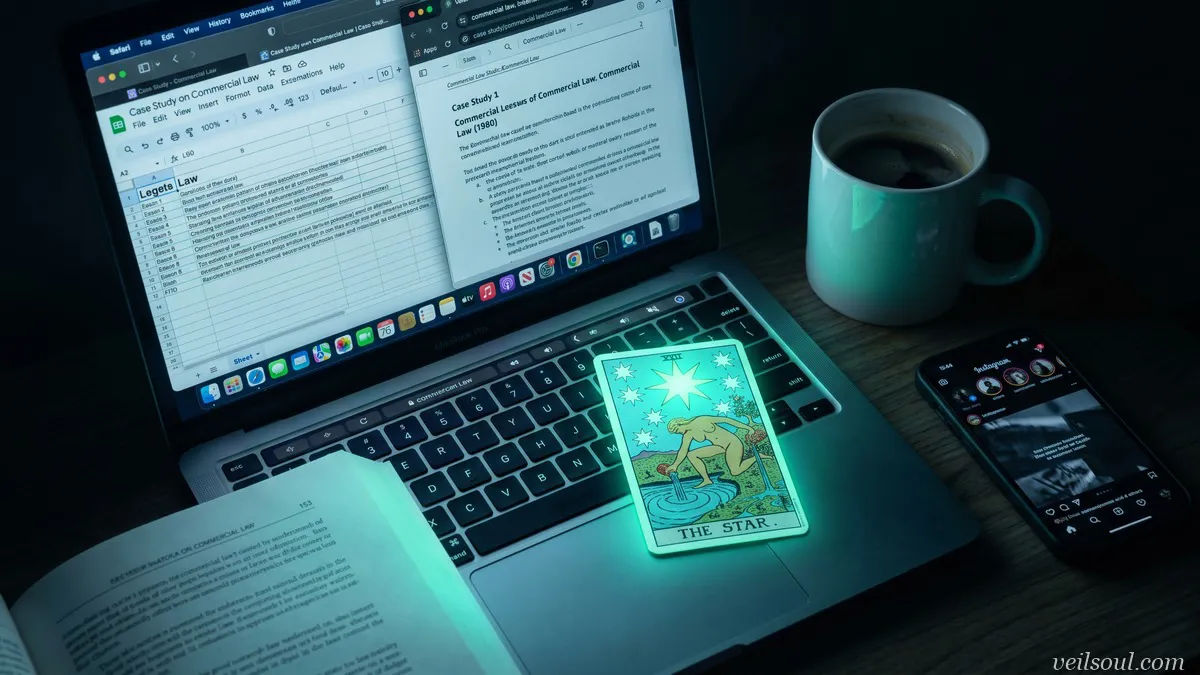
In fifteen years of reading, I've developed a personal metric for card power: it's the one you're still thinking about three days after the reading. The one that shows up in your dreams. The one you argue with in the shower.
This is different from the card that scared you. Fear is a reaction, not a relationship. The Tower scares people. But it doesn't usually follow them. It strikes, it disrupts, and then life reorganizes around the rubble. The card that follows you home is quieter. It's the Seven of Cups — seven chalices floating in clouds, each containing a different fantasy: a castle, jewels, a laurel wreath, a dragon, a snake, a shrouded figure, a glowing head. It's the card that says: you've been dreaming about six things to avoid committing to one. That follows you to work on Monday. That's there when you open Instagram and realize you've been comparison-scrolling for forty minutes.
"A college student — maybe twenty-one — came for a reading about his career. Practical kid. Business major. Had a spreadsheet of pros and cons for three different job offers. The Star appeared as his 'hidden influence' — that naked figure pouring water into the pond and onto the earth, the eight-pointed star above, seven smaller stars surrounding it. I told him the Star represents hope and authentic purpose. He nodded politely, clearly wanting something more actionable. Three weeks later he emailed me: 'I keep thinking about that Star card. I think the reason I can't choose between three jobs is that I don't actually want any of them. I want to make music. I've wanted to make music since I was twelve and I've been pretending that's not a real answer.' The Star didn't scare him. It haunted him. That's power."
When "Positive" Cards Are More Powerful Than "Scary" Ones
Counterintuitively, cards that appear gentle or celebratory can carry more weight than the dramatic Major Arcana. A card that shows you what you're missing is often harder to sit with than a card that confirms what you already fear.
The Ace of Cups — a golden chalice overflowing with five streams of water, a dove descending with a communion wafer, a hand emerging from a cloud — is traditionally read as new love, emotional beginnings, spiritual gifts. Lovely, right? But when this card appears for someone who has closed themselves off emotionally, who has decided that vulnerability is too expensive, who has built walls so thick they've forgotten there's a person inside — the Ace of Cups isn't comfort. It's a confrontation. Love is available. Are you?
Similarly, the Sun — that naked child on the white horse, sunflowers behind, the giant golden sun radiating — is the "happiest" card in the deck. But for someone living in the shadow of depression or grief, seeing the Sun card can feel like a cruel joke. Or — and this is the powerful part — it can feel like the first crack of light through a boarded-up window. A promise that the darkness isn't the whole story. That's the kind of power that doesn't make lists but changes lives.
So What IS the Most Powerful Tarot Card?
The most powerful tarot card is the one that tells you what you already know but haven't admitted yet. It's not specific to a name or number — it's specific to a moment, a question, a person.
If I had to name one card that I've seen create the most profound shifts across the widest range of people, I'd say Judgement. Not Death. Not The Tower. Judgement — the angel blowing the trumpet, the dead rising from coffins, arms outstretched, ready. Because Judgement doesn't end things or destroy things. It asks the hardest question in the deck: knowing everything you know now, who are you going to be?
Judgement says: the past happened. The mistakes happened. The losses happened. Now what? Not "move on" — that's too simple. Not "let go" — that's too passive. Rise. With everything you've been through still inside you. With the scars visible. With the coffin right there behind you as proof that you survived something you weren't sure you'd survive. Now, called by something bigger than your fear — rise.
That's power. Not the lightning of The Tower. Not the skeleton of Death. The trumpet call that says: it's time. You know it's time. The card knows it's time. The only question left is whether you'll answer.
Frequently Asked Questions
Is the Death card the most powerful card in tarot?
Death is one of the most recognizable cards, but recognizable and powerful aren't the same thing. Death's power lies in specificity — it points to exactly what's ending in your life. But many readers find that quieter cards like the Eight of Cups or Four of Cups create deeper, longer-lasting shifts because they require the querent to act, not just accept.
Can a Minor Arcana card be more powerful than a Major Arcana card?
Absolutely. Major Arcana represents archetypal forces, but Minor Arcana represents the daily reality where those forces actually play out. A Three of Swords appearing in a love reading can be more devastating than The Tower because it's personal, specific, and immediate. Power in tarot isn't about rank — it's about relevance to the moment.
Why do different tarot readers name different cards as most powerful?
Because a reader's answer reveals their own relationship with the deck. A reader who specializes in love readings might name The Lovers. A reader focused on shadow work might name The Moon. The card a reader calls "most powerful" often says more about the reader than about the card.
Does the most powerful card change over time?
Yes, and this is important. The card that moves you at twenty-five won't be the same card at forty-five. As your life changes — as you face different fears, pursue different goals, carry different losses — different cards will speak louder. Your relationship with the deck is alive. It grows as you do.
The question you came here with — "what is the most powerful tarot card?" — has no fixed answer. But the card that appeared in your mind while reading this article, the one you kept coming back to, the one that made your stomach tighten or your eyes prick — that's your answer. Not the deck's most powerful card. Yours.
Want to deepen your understanding of how cards interact? Read our guides on connecting multiple cards into a story, interpreting scary tarot cards, and what it means when you get all Major Arcana.
chat_bubble 0 Comments
Leave a Comment