
How to Give a Professional Tarot Reading: From Hobby to Practice
Veil Soul
Published on · 14 min read
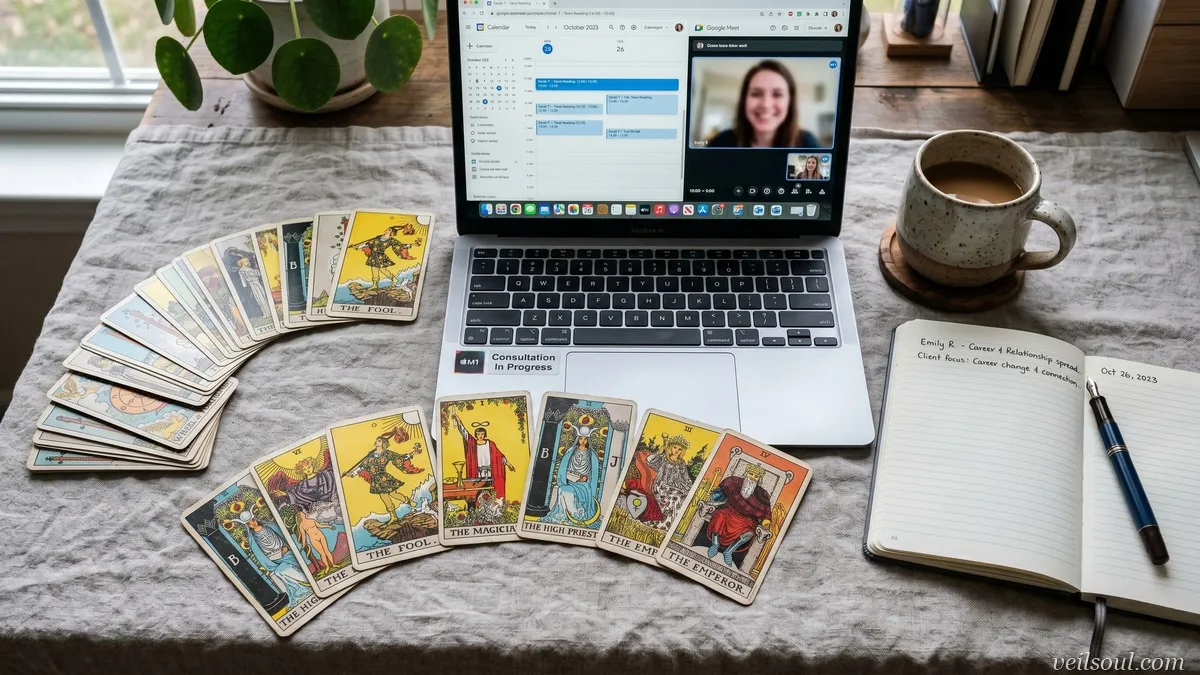
Key Takeaways
- Professional reading isn't about memorizing more meanings — it's about creating a container safe enough for someone to tell you what they can't tell anyone else. The cards are secondary to the relationship you build in thirty minutes
- The biggest difference between amateur and professional readers isn't accuracy — it's boundaries. Knowing when to speak, when to stay silent, and when to say "that's beyond what I can offer" is what separates a reader from a therapist cosplaying with cards
- Your first ten paid readings will be messy, imperfect, and the best education you'll ever receive. No certification replaces the moment someone cries across from you and you have to decide what to do next
You've been reading for friends for two years. They tell you you're "so accurate" and "should do this professionally." You've thought about it — maybe set up a website, maybe start charging. But every time you get close, something stops you. Not imposter syndrome exactly, more like a specific fear: what happens when someone sits across from me, pays money, and I draw a blank?
That fear is actually a good sign. It means you understand that professional reading carries weight. When your best friend asks about her relationship over wine, stakes are low. When a stranger books an appointment, drives thirty minutes, sits down and says "I just found out my husband is having an affair" — that's a different universe. And the distance between those two universes is exactly what this guide is about.
Rachel Pollack once wrote that the reader's job isn't to predict the future but to help the querent see their present clearly. That's the foundation of professional reading. Not fortune-telling — clarity-making.
What Makes a Reading "Professional" (It's Not What You Think)
A professional reading isn't defined by payment or certification — it's defined by the container you create. It's the difference between a conversation and a ritual, between chatting about cards and holding structured space for someone's deepest questions.
Here's what I mean by container. When you read for friends, the energy is loose. You might stop to refill wine glasses. You might say "oh that's interesting" and wander off on a tangent about your own life. There's no clock, no structure, no clear beginning or end.
Professional reading has architecture. It has a greeting that sets expectations. A centering moment that signals "we're beginning now." A structured spread with clear positions. A closing that says "this is complete." And boundaries — firm, kind boundaries — that protect both you and the person across from you.
The Hierophant — that figure seated between two pillars, one hand raised in blessing, two acolytes kneeling before him — gets a bad reputation as rigid or dogmatic. But in the context of professional practice, the Hierophant is your best teacher. He represents structure in service of the sacred. Not rules for rules' sake — form that creates safety. The pillars aren't prison walls; they're the doorframe through which transformation walks.
Setting Up Your Space and Practice
Your reading space communicates before you say a single word. Whether it's a dedicated room, a corner of your apartment, or a video call background — it tells your client how seriously you take what's about to happen.
You don't need a crystal-draped altar or incense thick enough to set off smoke alarms. What you need is intention. A clean surface. A cloth for your cards. Water for your client (people get thirsty when they're nervous — I learned this after my third client's voice cracked mid-question). Good lighting. A chair that doesn't wobble.
For online readings — which now account for over half of professional sessions — your background matters more than your camera. A blank wall with one meaningful object is better than a cluttered shelf of spiritual tchotchkes. Test your audio. Test your lighting. Nothing kills the sacred faster than "can you hear me now?"
"My first professional reading was a disaster I'm grateful for every day. A woman in her fifties sat down, and I launched straight into shuffling — no greeting, no check-in, nothing. Halfway through the Celtic Cross, she interrupted: 'Can I ask what we're doing?' I realized I'd never explained the spread, never asked what she wanted to explore, never even introduced myself properly. I was so focused on getting the cards right that I forgot there was a person in front of me. That evening I wrote out a script — not for the reading itself, but for the first three minutes. That script changed everything."
The First Five Minutes: Where Readings Succeed or Fail
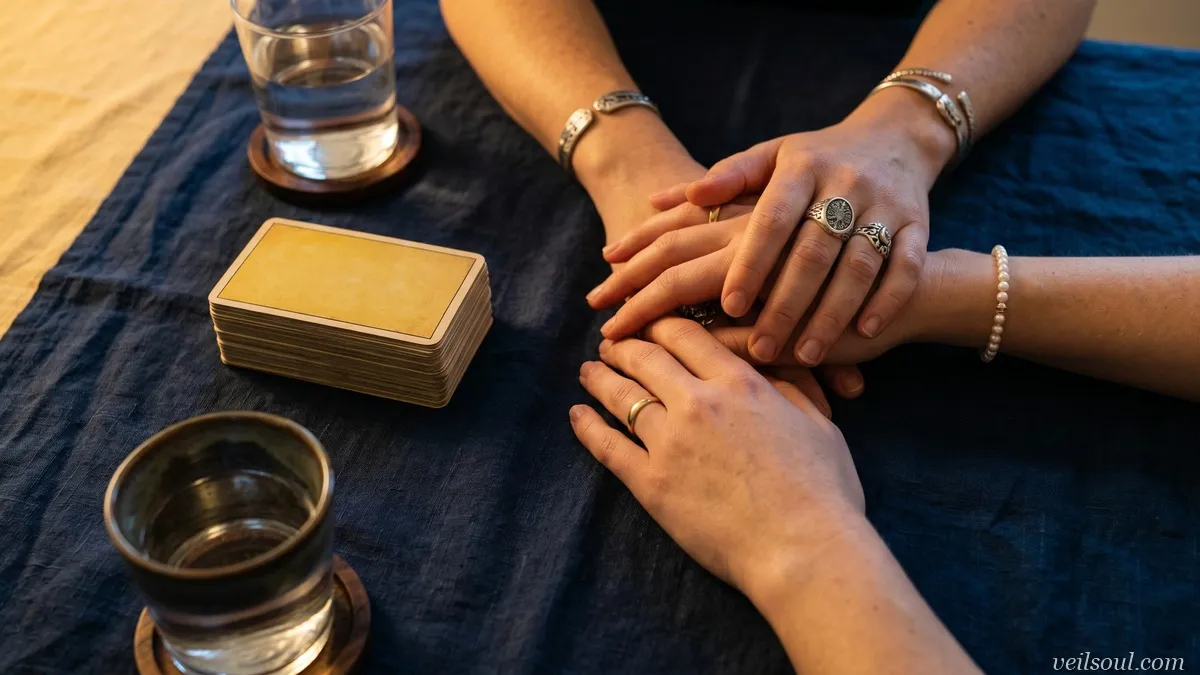
Eighty percent of a reading's success is determined before you turn over the first card. The opening sets the emotional contract — it tells your client what to expect, what's possible, and what you need from them.
Here's a structure that works:
- Greeting and settling — "Thank you for being here. Take a moment to arrive. We're not in a rush."
- Expectations — "I read tarot as a reflective tool, not fortune-telling. I'll share what I see in the cards, and we'll explore what resonates with you."
- Consent — "Is there anything you'd prefer I not touch on today?" (This question alone will set you apart from 90% of readers.)
- Focus question — "What brought you here today? What would make this reading valuable for you?"
- Card selection — Explain the spread you're using and why.
That consent question deserves emphasis. Some people don't want to hear about health. Some aren't ready to discuss a recent death. Some will tell you everything unprompted. But asking communicates that you see them as a person, not a subject. The High Priestess — seated between the black and white pillars of Boaz and Jachin, the Torah scroll partially hidden in her lap — teaches this: wisdom isn't about revealing everything you know. It's about discerning what should be spoken and what should remain veiled.
Reading the Person, Not Just the Cards
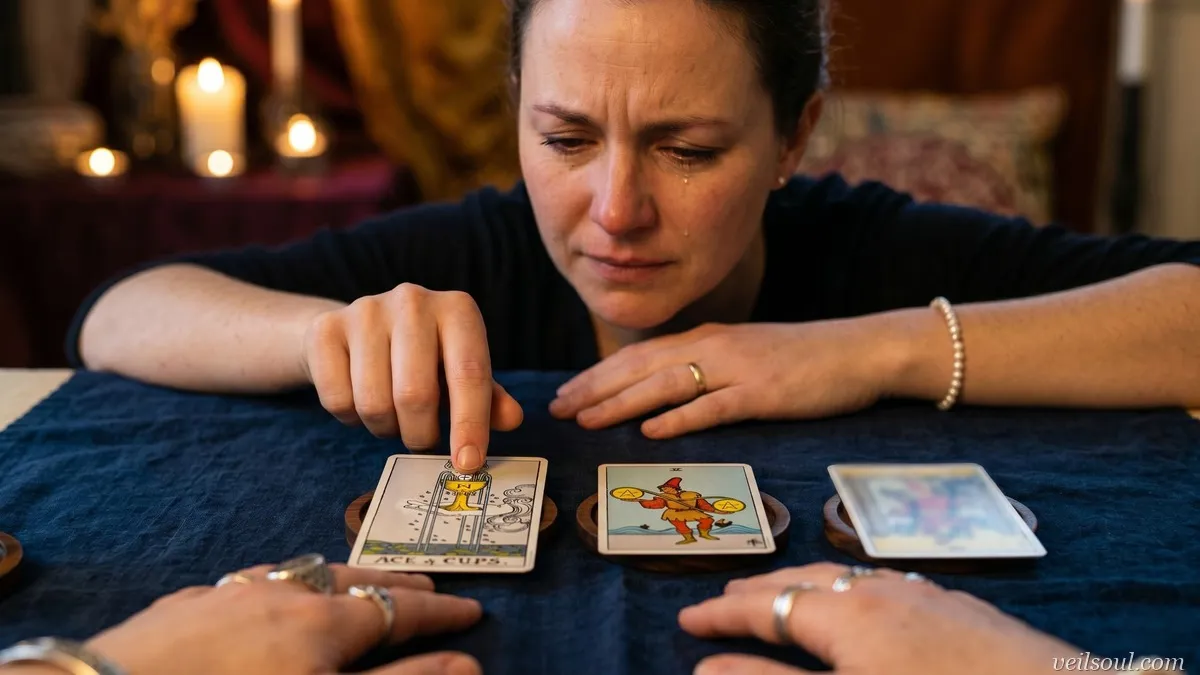
Cards don't exist in a vacuum. The same Three of Swords means something entirely different for someone going through divorce versus someone who just lost a parent. Professional reading means letting the person's reality shape your interpretation.
This is where amateur readers stumble most. They learn card meanings and apply them like a formula: Three of Swords equals heartbreak, Ten of Cups equals happy family, done. But a professional reader notices that when they said "happy family," the client's jaw tightened. A professional reader asks: "What comes up for you when you see this image?"
Mary K. Greer calls this "interactive reading" — the practice of treating the querent as co-creator of meaning, not passive recipient. The cards provide the visual language. The client provides the emotional context. Your job is to weave them together into something that makes the client go quiet — not because they're confused, but because they've just heard something true.
The Magician — one hand pointing skyward, the other grounding toward earth, all four suit symbols on the table before him — represents this synthesis perfectly. You're the channel between the archetypal (what the cards depict) and the personal (what the client lives). Neither alone is sufficient.
Handling Difficult Cards and Difficult Moments
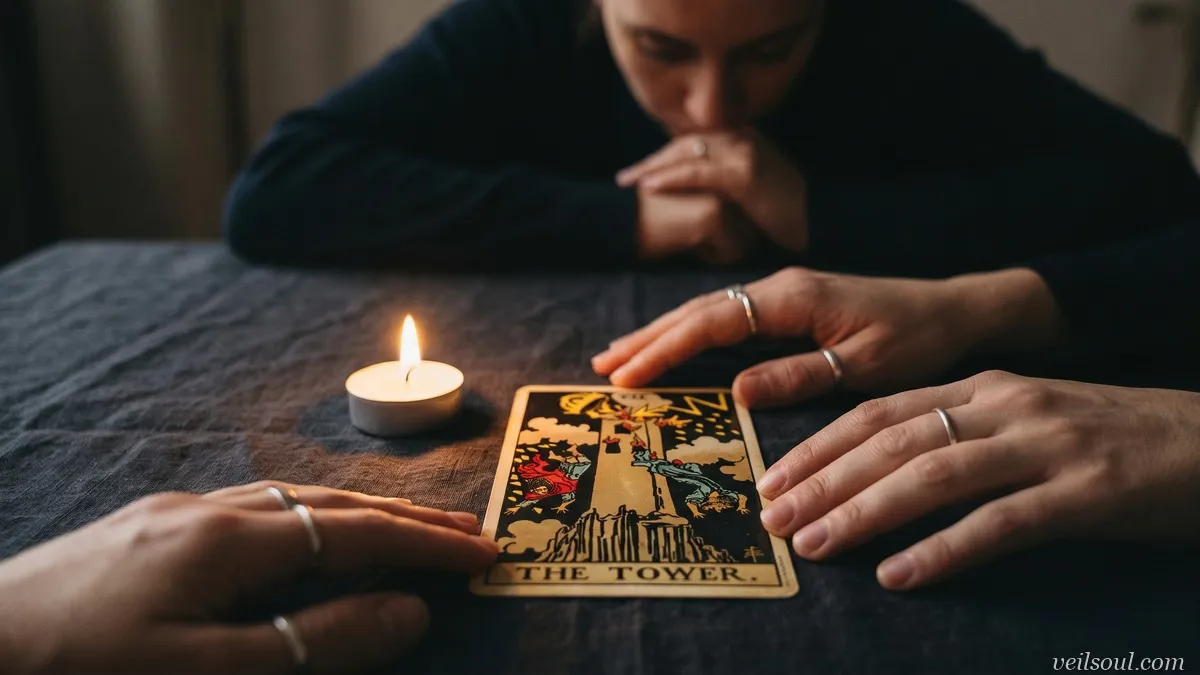
Every professional reader eventually faces the moment when The Tower, Death, or the Ten of Swords appears for someone who is already fragile. How you handle that moment defines your practice more than any spread you'll ever learn.
Rule one: never lie. Don't pretend The Tower is "just about exciting changes" when someone asks about their marriage and the rest of the spread screams upheaval. Dishonesty doesn't protect — it patronizes. And clients sense it. They came for truth, not comfort.
Rule two: never brutalize. "Your relationship is over" is not a reading — it's a verdict. Instead: "The Tower shows a structure that's being dismantled — sometimes from the outside, sometimes from within. Looking at the rest of the spread, the question isn't whether things are changing, but whether this change is something happening to you or something you're finally allowing to happen."
The difference is agency. Professional reading always returns power to the querent. Even Death — that skeletal figure on the white horse, the Sun rising between two towers in the background that most people miss — is about transformation the querent can participate in, not a sentence handed down.
"A man in his thirties booked a career reading. Buttoned-up, corporate, clearly uncomfortable being there. 'My wife gave me this as a birthday gift,' he said, like an apology. I pulled the spread and the Eight of Cups sat in the center — that figure walking away from everything he'd built, heading toward mountains he couldn't yet see. I almost gave the textbook answer about 'leaving what no longer serves you.' But something in his posture — the way he was gripping his knees — made me pause. 'You've already decided to leave, haven't you?' I said instead. He stared at the card for a long time. 'I put in my notice last Friday,' he whispered. 'I haven't told her yet.' The reading shifted from career to courage. The cards didn't change — but the conversation did."
Boundaries: The Most Professional Skill You'll Ever Learn

Boundaries aren't walls between you and your clients — they're the banks of a river that keep the water flowing in one direction. Without them, readings become therapy sessions, friendships, or emotional dumps that leave you depleted.
Essential boundaries for professional readers:
- Time — Start on time. End on time. "We have five minutes remaining" is not rude; it's respectful.
- Scope — You're a tarot reader, not a therapist, doctor, or financial advisor. "I'm seeing themes around emotional health that might benefit from professional support" is appropriate. Diagnosing depression is not.
- Emotional — You can hold space without absorbing pain. If a client's reading leaves you emotionally wrecked, your boundaries need work.
- Third parties — "What is my ex thinking?" Direct your reading to what the client can control: "Let's look at what would serve your healing, rather than reading someone who isn't here."
- Repeat bookings — Some clients want weekly readings about the same question. That's dependency, not guidance. The Hermit — lantern raised, walking alone on the mountain — reminds us that the goal is to help people find their own inner light, not to become it for them.
The Temperance card — the angel with one foot on land and one in water, patiently pouring between two cups — is the patron card of professional boundaries. Not too much, not too little. The constant, conscious balancing of what you give and what you withhold.
Building Your Practice: Practical Steps
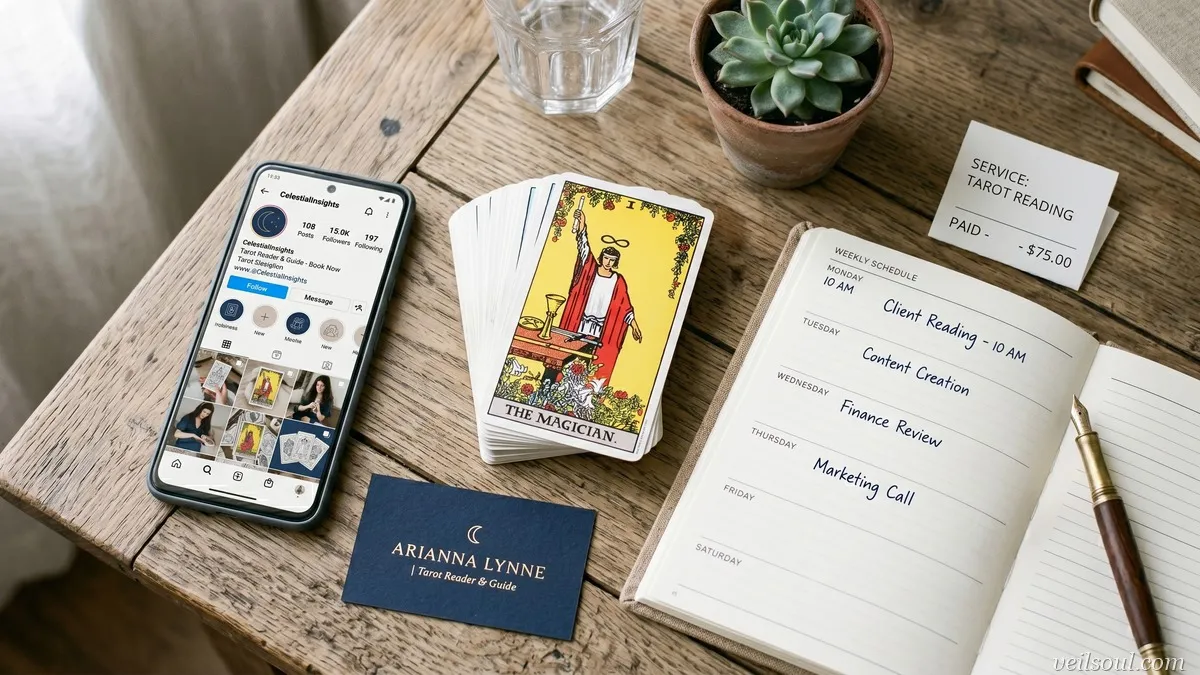
You don't need a business plan, a website, or a certification to start. You need ten willing humans and the courage to say "I'm a tarot reader" without adding "but I'm still learning."
Here's a realistic timeline:
- Months 1-2: Free readings — Read for ten people you don't know well. Friends of friends. Online communities. Ask for honest feedback, not validation.
- Month 3: Sliding scale — Start charging something. Even $10 changes the dynamic. Payment creates accountability on both sides.
- Months 4-6: Build infrastructure — Simple booking system. One social media presence (not five). A description of what you offer that sounds like you, not a template.
- Ongoing: Develop your voice — What's your specialty? Love readings? Career guidance? Shadow work? You don't need to read for everyone. The readers who thrive long-term are the ones who know who they serve best.
One thing nobody tells you: the hardest part of going professional isn't the readings. It's the admin. Scheduling. Cancellations. Payment processing. No-shows. The King of Pentacles — seated on his throne carved with bull heads, grape vines draped around his crown, one hand resting on the golden coin — embodies what you need: the ability to treat your spiritual practice with the same practical care as any business. Spirit and spreadsheet are not enemies.
Ethics: The Foundation Everything Else Stands On
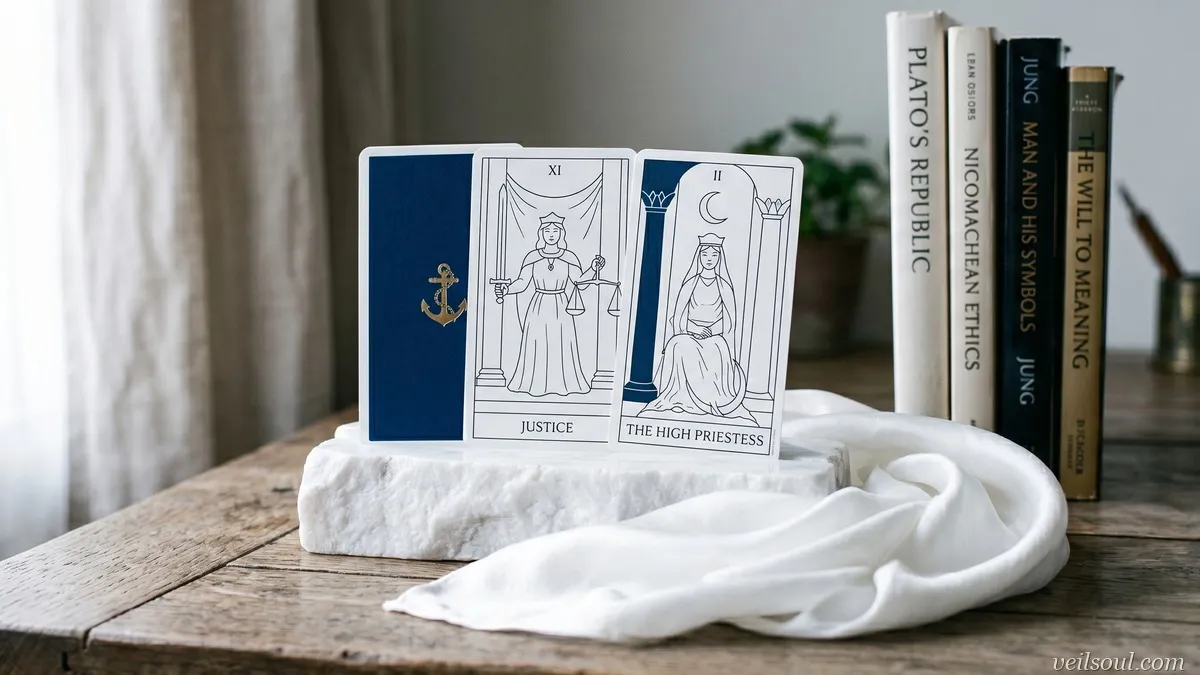
Without ethics, everything else in this guide is just technique. Ethics aren't restrictions on your practice — they're what makes your practice worth trusting.
Non-negotiables:
- Never diagnose medical conditions. "I see health themes in these cards" is fine. "You might have cancer" is malpractice wrapped in mysticism.
- Never predict death. Full stop. Not even if someone asks directly.
- Never create dependency. If a client can't make decisions without consulting you, you've failed them — no matter how many readings they book.
- Confidentiality is sacred. What happens in a reading stays in a reading. No social media stories about "a client today" that's recognizable.
- Informed consent. Your client should know your approach, your limitations, and your fees before they sit down.
The Justice card — the figure with sword raised in one hand, scales perfectly balanced in the other — isn't popular among readers because it's not mystical or mysterious. It's straightforward. It asks: are you conducting yourself in a way you'd be proud to explain to anyone? If the answer requires qualifications, something needs to change.
Frequently Asked Questions
Do I need certification to read tarot professionally?
No. There's no governing body for tarot, no required license, no universally recognized certification. Some courses and organizations offer certificates that can build confidence and credibility, but they're not legally required. What matters more is practice, feedback, and a genuine commitment to ethical reading. Your first hundred readings will teach you more than any certification program.
How much should I charge for a tarot reading?
Rates vary enormously by location and format — from $20 for a fifteen-minute online pull to $200+ for a ninety-minute in-depth session. Start by researching readers in your area or niche. Price low enough to attract your first clients, but not so low that you resent the work. Raise your rates as demand grows. Remember: charging fairly isn't greedy — it's what allows you to keep doing this sustainably.
What if I go completely blank during a paid reading?
It happens to every reader. The honest response is the professional one: "Let me sit with this card for a moment." Describe what you literally see in the image. Ask the client what stands out to them. The blank doesn't mean you've failed — it means you're not forcing an interpretation, which is actually a sign of integrity. The meaning will come. And if it doesn't, saying "this card is being quiet today — let's see what the surrounding cards reveal" is perfectly acceptable.
Should I read for friends and family if I'm also reading professionally?
You can, but set different expectations. Professional boundaries apply differently with loved ones. Some readers keep it separate entirely — professional practice is professional, personal readings are casual and free. Others charge family the same rate to maintain the energetic contract. Find what works for you, but be intentional about it.
How do I handle a client who wants me to tell them what to do?
Redirect gently. "The cards aren't here to make your decision — they're here to show you what you might not be seeing." Most people who want to be told what to do already know what they want; they just need permission. Your job is to illuminate, not instruct. If someone persistently wants directive advice, they may benefit more from a counselor than a card reader.
The most honest thing I can tell you about professional reading is this: you will never feel fully ready. There is no amount of study, no number of practice readings, no certification that eliminates the flutter in your chest when someone sits down and trusts you with their truth. That flutter doesn't go away — and it shouldn't. It means you understand the weight of what you're holding.
Ready to develop your reading skills further? Explore our guides on reading tarot intuitively, connecting multiple cards into a story, and simple spreads for beginners to deepen your practice.
chat_bubble 0 Comments
Leave a Comment